IC Markets Review

4.8/5
Trusted & Regulated
Patrick LewisPatrick Lewis

Written by

Patrick Lewis
Grace SullivanGrace Sullivan

Fact Checked by

Grace Sullivan

Updated

Recently
ic markets review

Finding a forex and CFD broker is more than just about choosing the one that offers the lowest spreads. There are other important things that every trader should keep in mind too, including regulation, execution quality, trading platforms, and overall reliability.

Founded in 2007 and currently headquartered in Sydney, Australia, IC Markets is well-known as a broker that focuses on fast execution and competitive pricing. At the same time, beginners can also still benefit from its simple account structure, although they may find some areas, like education and proprietary tools, less comprehensive than those of other competitors.

Is IC Markets Safe & Regulated?

Safety should always be one of the first things to consider when selecting a forex or CFD broker. Low spreads and advanced trading platforms are indeed attractive, but they mean little when users’ funds are not protected, or the broker operates with no proper oversight.

IC Markets is not a publicly listed company and does not even operate as a bank. However, they have been serving clients across multiple regions through various financial legal entities.

A. Regulatory Oversight

IC Markets operates through a number of legal entities, with the regulator overseeing users’ accounts depending on where they live.

Clients residing in Australia trade under an entity regulated by the Australian Securities and Investments Commission (ASIC) with Australian Financial Services Licence (AFSL) No. 335692. ASIC itself is one of the world’s most trusted financial regulators and mandates that brokers adhere to policies on areas, including risk management, client fund protection, and financial reporting.

As for clients in Europe, they can open an account with IC Markets (EU) Ltd, which is regulated by the Cyprus Securities and Exchange Commission (CySEC) under licence number 362/18. The company also follows MiFID II policies because Cyprus is part of the EU.

As for those from other countries, they are generally onboarded through Raw Trading Ltd, which is regulated by the Cyprus Securities and Exchange Commission (CySEC) under licence number 362/18. However, the FSA doesn’t offer the same level of investor protection as ASIC or CySEC, despite being a financial regulator.

B. How Client Funds Are Protected

In IC Markets, client money is held in segregated accounts. To put it simply, client funds are maintained apart from the broker’s operating capital. This arrangement helps lower the likelihood that client funds will be used for corporate expenses.

The exact level of protection also heavily depends on the entity where client accounts are registered.

For example, the Investor Compensation Fund (ICF) may offer protection to qualified retail clients who trade under the Cyprus business. In the event that the broker goes insolvent, each qualifying client may receive compensation of up to €20,000. Meanwhile, Australian clients do not receive a similar compensation scheme for CFD trading, even though ASIC requires brokers to adhere to the existing policies.

C. Execution Model and Potential Conflicts of Interest

IC Markets is designed to process trades in a quick manner by connecting to numerous liquidity providers, including banks and other financial institutions. This helps cut down on buying and selling delays and provides clients’ orders with access to competitive market prices.

The broker also uses market execution, which means clients’ trades are filled at the best available price when they enter the market. Since prices can change anytime, the final price may be slightly better or even worse than the one previously clicked. This is fairly typical in dynamic markets.

Unlike other brokers, IC Markets doesn’t use requotes. Put another way, if the market price changes while an order is being processed, the broker won’t ask the client to accept a new price before finishing the trade. Rather, the next available market price is used to fill the client’s request.

It’s also important to note that IC Markets is more than just a middleman. It connects trades to various liquidity providers. This is typical of CFD brokers and does not always imply that trades are handled unfairly or that prices are manipulated.


IC Markets logo

IC Markets

Fee LevelLow
Inactivity FeeNone
Index CFD FeeLow
Investor ProtectionNegative Balance Protection
Mobile PlatformMT4, MT5, cTrader, TradingView
Visit IC Markets

Fees & Spreads

ic markets spreads

Trading fees might seem small at first, but they can actually make a difference over time, particularly for traders who place trades regularly. This is one area where IC Markets excels, offering competitive prices with many well-known forex and CFD brokers.

There are two different pricing models in IC Markets, one with all costs in the spread and another that combines a trading commission with lower spreads. This allows traders to choose the option that fits their trading style.

A. Standard vs. Raw Spread

IC Markets offers three different account options with different fees. First, the Standard Account, which is the simpler one, has an average spread for the EUR/USD pair of around 0.62 pips. It does not have a separate commission because the trading fee is already included in the spread.

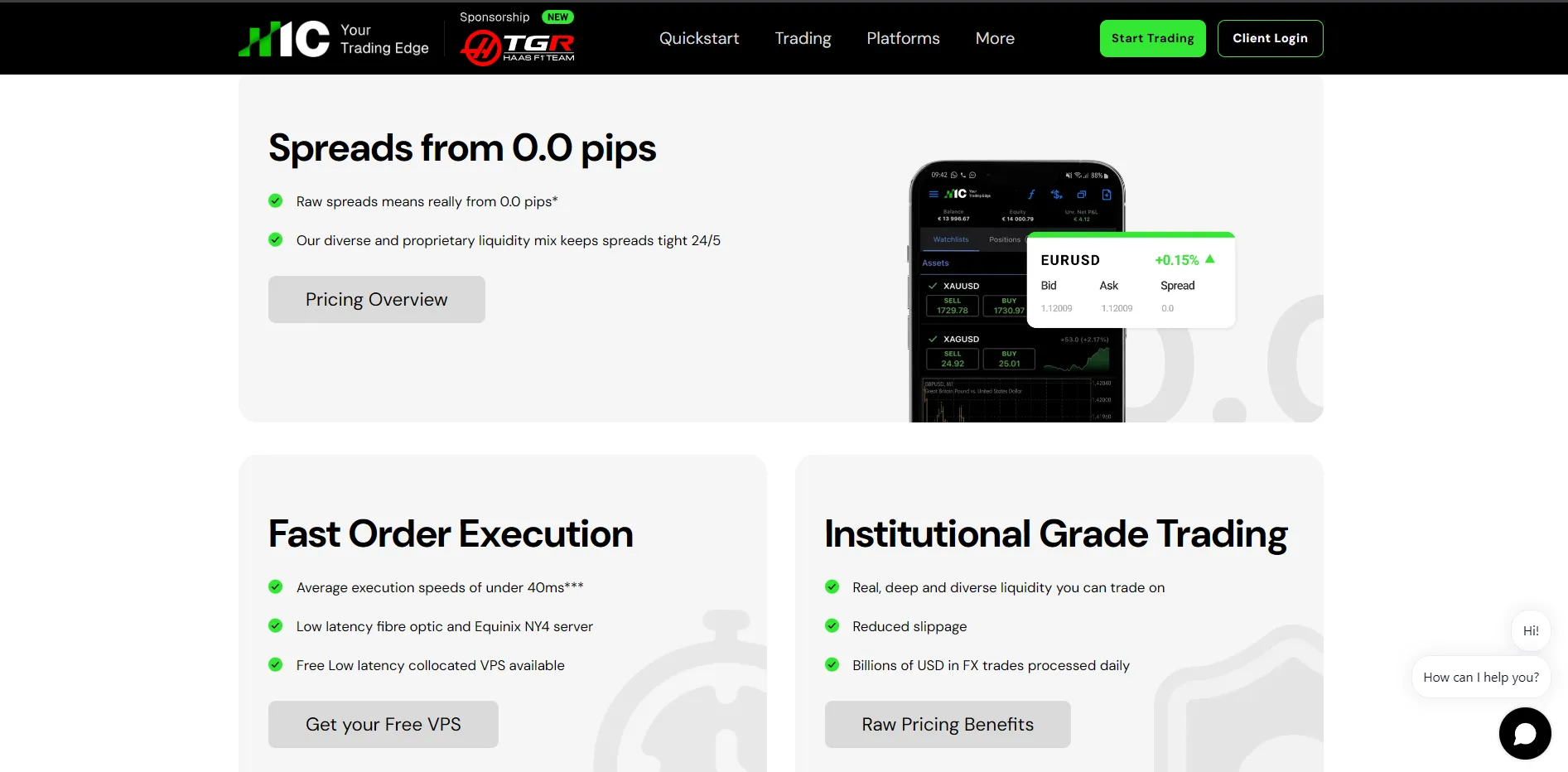
Second, the Raw Spread Account is available on MT4 and MT5. It offers much lower spreads, which start from around 0.0 pips during busy market hours. However, there’s also a commission of $3.50 per side per standard lot, or $7 for opening and closing a trade.

The third one is cTrader, which is also slightly lower compared to the two. It charges $3.00 per side, or $6 per standard lot round trip, while also offering similar trading conditions.

B. How Competitive Are the Fees?

Always look at the total cost of each trade to know which account has the lowest fees.

After fees are taken into account, the total cost of trading EUR/USD is around 0.62 pips on the cTrader Raw Spread account and 0.72 pips on the MetaTrader Raw Spread account. Although there is no additional commission to pay, the Standard Account likewise averages about 0.62 pips.

Practically, the difference between the accounts is fairly small. Many experienced traders tend to choose the Raw Spread account because of its tighter spreads, while newer traders often go with the Standard Account because the pricing is easy to understand.

C. Other Trading and Account Fees

Most non-trading fees in IC Markets are minimal.

There are no inactivity fees, so users won’t get charged for taking a break from trading. Deposits and withdrawals are also mostly free, although banks or other payment providers may charge their own fees, particularly for international transfers.

IC Markets also charges overnight fees, like most forex and CFD brokers. However, they may sometimes be called swap fees, in which the amount depends on the market being traded, the position size, and current interest rates. These fees are mostly applied for traders who keep their positions open for several days or longer.


Trading Platforms & Tools

One of the strongest features of IC Markets is the variety of trading platforms it supports. Clients have access to several well-known and trusted platforms, including MetaTrader 4 (MT4), MetaTrader 5 (MT5), cTrader, and TradingView.

Each platform is accessible on desktop, web browsers, and mobile devices, so traders can check the markets and manage their accounts easily. Of course, each platform has its own style and features. Therefore, traders can simply choose which one fits their trading style.

A. MetaTrader 4 (MT4) and MetaTrader 5 (MT5)

MT4 is one of the most widely used trading platforms in the forex market. While it’s been around for years, it remains popular because it is easy to use and offers all the main trading tools. It also offers custom indicators and automated trading features, making it ideal for both beginners and experienced traders.

Meanwhile, MT5 is the newer version of its predecessor. It comes with several extra features, such as more chart timeframes, additional order types, and a built-in calendar that displays all important financial events. It also supports more types of markets, giving traders the flexibility of choice.

Traders can create or install automated trading programs in both platforms that can open and close trades based on rules that are set in advance. But this feature is only available on the desktop version.

B. cTrader

cTrader has a more modern design and a sleeker layout, which some traders may find easier to navigate compared to MetaTrader.

The platform has a good selection of charting tools, technical indicators, and order types. In addition, charts are fairly easy to customize and understand, allowing traders to make a good decision.

For those interested in automation, cTrader also has trading robots that can be accessed in the cTrader Automate feature. There’s also cTrader Copy that can be used to follow and copy trades from other traders.

C. TradingView

TradingView is one of the newest platforms at IC Markets. It’s well known for its user-friendly charts and huge online trading community.

By connecting an IC Markets account to TradingView, traders can directly analyze the market, place trades, and even manage open positions from the same platform. In other words, traders don't need to switch between different programs while doing the trade.

Many traders also favor TradingView because they can save chart layouts, create watchlists, and share market ideas with other users.

D. Extra Trading Tools

IC Markets itself also offers a number of additional tools to streamline market analysis.

For MetaTrader users, they can have Advanced Trading Tools such as price alerts, trading statistics, and improved order management. There’s also access to Trading Central and Autochartist, two popular tools to scan the markets and find out possible trading opportunities based on real-time chart patterns and market trends.

IC Markets also supports a copy trading feature to help users automatically copy the trades of more experienced investors. In addition, the broker also offers Virtual Private Server (VPS) services for eligible clients. A VPS is essentially a remote computer that keeps trading programs running even when a personal computer is turned off or offline.

Overall, IC Markets offers enough flexibility for both beginners and more experienced traders with their platforms and tools without forcing everyone to use the same exact platform.


Account Types

IC Markets offers three main account types with the same access to markets and trading products. Each account requires a minimum deposit of $200. As previously mentioned, the main difference is how trading fees are charged and also which trading platform can be used.

  • Standard Account: This one is the easiest option to understand, making it an ideal choice for beginners. There are no separate trading commissions, and the cost of each trade is included in the spread. This means there are fewer costs that users must calculate when placing a trade.

  • Raw Spread Account: This account offers lower spreads but charges a fixed commission for every trade. Spreads can be very close to zero during busy market hours. Although the pricing model seems a bit complicated, many active providers prefer it because of its lower spreads. It’s also available on MT4 and MT5.

  • cTrader Raw Spread Account: This one has almost the same pricing as MetaTrader, but it’s designed for those who use the cTrader platform. Its commission is a bit lower than the MetaTrader, so the overall trading cost can be a bit cheaper in some cases.

IC Markets also offers an Islamic Account which is also known as a swap-free account, this account is designed for Muslim traders. It does not charge or pay overnight interest (swap), making it compliant with Islamic finance principles.

Can you open an account?

Global account availability

Yes, you can open an account at IC Markets if you live in Indonesia!

Indonesia
Visit Brokers

Tradable Assets

IC Markets Forex trading currency pairs

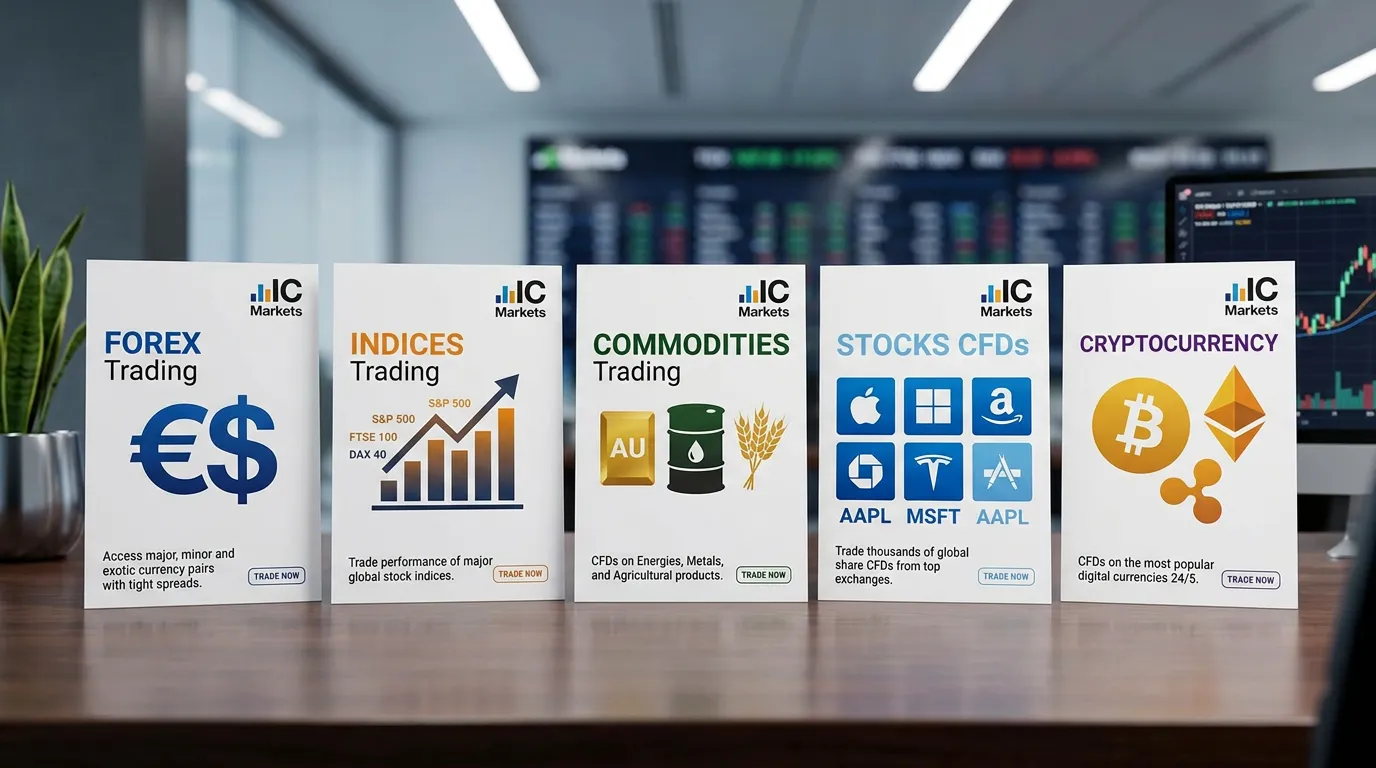
IC Markets has a variety of markets with over 3,500 trading products. These consist of commodities, bonds, stocks, stock market indices, forex, and cryptocurrencies.

The majority of these goods are available as CFDs (Contracts for Difference). Simply put, rather than purchasing and holding the physical item, traders are trying to profit on price fluctuations. For instance, there is no ownership of the company's shares when trading a stock CFD. The trade just keeps track of price changes.

This type of trading is fairly common among forex and CFD brokers because it allows traders to access various markets from a single account.

A. Forex

Forex is the main area of focus in IC Markets. The brokers offers more than 60 currency pairs, including some of the most traded currencies in the world, such as GBP/USD, EUR/USD, USD/JPY, and AUD/USD. There are also less popular currency pairs for traders looking for more variety.

The wide selection of currency pairs gives traders plenty of choices, whether they prefer to trade more popular markets or explore less active ones.

B. Stock Market Indices, Commodities, and Bonds

IC Markets provides traders access to major stock market indices from around the world. These include well-known markets such as the S&P 500, Nasdaq 100, Dow Jones, FTSE 100, DAX 40, and Nikkei 225.

For those interested in commodities, IC Markets offers gold, silver, crude oil, natural gas, and some agricultural markets. These goods enable traders to profit from changes in the price of some of the most significant raw commodities in the world.

Bond markets are also accessible in some areas. With the use of these products, traders can monitor changes in the price of government bonds without having to purchase the bonds themselves.

C. Stocks and ETFs

There are thousands of stocks from major global exchanges available in IC Markets. These include companies listed in the US, Europe, and Australia.

But it’s important to note that these are stock CFDs, not real company shares. To put it simply, traders can profit if prices move up or down, but they are not shareholders and do not even receive stakeholders’ benefits such as voting rights.

Traders in some regions also have access to ETC CFDs. These are investment funds that hold assets, such as stocks from a particular market, where traders can follow the price of the fund without directly owning it.

D. Cryptocurrencies

Cryptocurrencies are also available in IC Markets as CFDs. These include Bitcoin, Litecoin, Ethereum, and several others. Much like other products, traders can benefit from price movement without buying the actual digital coins. Therefore, there’s no need to set up a crypto wallet or even manage private keys because traders do not own the cryptocurrencies directly.


Deposits & Withdrawals

IC Markets offers easy deposits and withdrawals. The broker supports several payment methods, doesn’t charge fees for most withdrawals and deposits, and requires a lower deposit for all account types. However, the available payment options and processing times vary depending on the area and the IC Markets entity where users are located.

A. Deposit Methods and Processing Time

IC Markets supports a number of payment methods, including:

  • Bank transfer

  • Visa and Mastercard

  • PayPal

  • Neteller

  • Skrill

  • UnionPay

  • Local payment methods in certain countries

Most deposits that are made through cards and e-wallets are processed almost immediately. This allows traders to start trading after the deposit is successfully added to their accounts. However, transfers through banking institutions take longer and may require several business days, particularly for international transactions.

B. Withdrawals

The process of funds withdrawals is also a straightforward one. In most cases, IC Markets using the same payment method that the users used for the deposit to return their money. This is actually a common security practice conducted to help protect client accounts.

But keep in mind that processing times for withdrawals may vary depending on the payment method. Withdrawals using e-wallet are often completed within one business day after approval. Meanwhile, bank transfers and card withdrawals may take several business days to receive the funds back.

C. Fees

IC Markets does not charge any fees, including deposit, withdrawal, as well as inactivity. However, banks and payment providers may still apply charges for transfer. For example, currency conversions or international bank transfers often have additional fees that are outside the broker’s control.

All things considered, IC Markets provides a simple and clear funding procedure that makes it simple for both beginner and experienced traders to deposit and withdraw money.


Customer Support

Good customer support can make a great difference, particularly when there are questions regarding opening an account, making a deposit or withdrawal, or using the trading platform. IC Markets offers a number of ways to reach out to its support team, including live chat, email, phone, an online ticket system, and a Help Center. Below is the contact information:

  • General: +1 626 657 7688

  • Brazil: +558008783061

  • Vietnam: +8412032101

  • Indonesia: +6278033212195

  • Colombia: +5718005190363

Inquiries can also be sent through email:

 Customer support is available 24 hours a day, Monday to Friday, in line with the global forex market. The support is also available in several languages (English, Spanish, Japanese, Korean, Arabic, Chinese, German, Indonesian, Malay, Portuguese, and Russian) because IC Markets serves traders from various countries.

Aside from customer support, IC Markets also provides educational resources for traders who want to learn more about the markets. These include the IC Your Trade podcast, essays, videos, seminars, and introductory tutorials. 


Pros & Cons

Pros

  • Regulated by well-known regulators such as ASIC and CySEC
  • Competitive spreads with flexible pricing that are available on Standard and Raw Spread Accounts
  • Support MT4, MT5, cTrader, and TradingView
  • More than 3,500 trading products, includin stocks, forex, indices, commodities, bonds, and cryptocurrencies
  • Provide multiple copy trading options and VPS support for eligible clients
  • No inactivity fees and no broker fees on most withdrawals and deposits
  • Straightforward account structure with a low $200 minimum deposit

Cons

  • The IC Markets entity under which the account is registered determines the degree of investor protection
  • Uses only third-party systems and lacks a proprietary trading platform
  • While helpful, educational tools are not as extensive as those of certain competitors
  • Since the majority of products are CFDs, traders are unable to own the underlying assets
  • Does not offer direct investment in ETFs or real stocks
  • Some payment methods and processing times vary depending on the client’s region
  • Not publicly listed and does not operate as a banking institution

Frequently Asked Questions (FAQ)

Is IC Markets legal?

Yes. IC Markets has been in operation since 2007 and is regulated by several financial legal authorities, including the Australian Securities and Investments Commission (ASIC) and the Cyprus Securities and Exchange Commission (CySEC). For international clients, the broker also runs other entities governed by laws in places like the Seychelles.

What is the minimum deposit for IC Markets?

The minimum deposit in IC Markets is $200 for all live account types.

Which trading platforms does IC Markets support?

IC Markets supports MT4, MT5, cTrader, and TradingView across desktop, web, and mobile devices.

Does IC Markets charge inactivity fees?

No. IC Markets does not charge inactivity fees if users stop trading for a period of time.

What assets can I trade on IC Markets?

IC Markets offer various range of products, including forex, indices, bonds, stocks, cryptocurrency, and other commodities.

Final Verdict: Is IC Markets Worth It?

IC Markets has established a strong reputation by focusing on the factors that are most important to many forex and CFD traders, such as low trading costs, quick trade processing, and a large selection of trading platforms. The broker also gives clients access to well-known platforms ike MT4, MT5, cTrader, and TradingView, allowing traders to select the platform that best suits their needs.

The cost is another strong point of IC Markets. With both Standard and Raw Spread accounts, traders have the option of smaller spread with a separate commission or a simple pricing model. Other than that, there are no inactivity fees or fees on most withdrawals and deposits.

That said, IC Markets may not be the a good fit for everyone. The broker is not appropriate for investors who wish to purchase and own actual stocks or ETFs because its primary focus is on forex and CFD trading. 

All things considered, IC Markets is a solid choice for anyone searching for a well-regulated broker with affordable prices, a large selection of trading products, and access to a number of the most well-known trading platforms in the market. Despite a few drawbacks, it is a good option for both beginner and experienced forex and CFD traders due to its affordable prices, dependable trading conditions, and variety of platform options.

Patrick Lewis
Written byPatrick LewisCFA | Trading ExpertPatrick Lewis is a CFA Charterholder with over a decade of experience in financial markets. He specializes in reviewing brokers and exchanges with a strong focus on transparency, fees, and regulatory standards.Read profile →